How Does In-Office Professional Teeth Whitening Work?
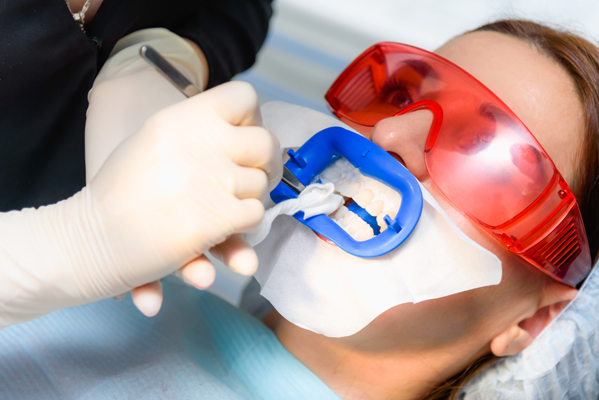
In-office professional teeth whitening is a great way to improve the appearance of your smile and gain more confidence. This review offers insights into how in-office professional teeth whitening works, including a step-by-step guide to the process many general dentists use.
A review of the professional teeth whitening process
Every dentist has their own profess for professional teeth whitening. However, there are common steps that you can expect before your visit. Most notably, professional teeth whitening often involves the use of a teeth shade, discussing treatment goals, isolating the dental enamel, applying the bleaching agent and polishing teeth.
Teeth shade and treatment goals
The first step in the professional teeth whitening process is determining the shade of teeth and establishing realistic expectations for how much teeth can improve through treatment. This helps the patient to mentally prepare and have an understanding of what they can expect. Most patients are surprised by how much their teeth shade improve, however. If the dentist cannot improve the shade of teeth to the desired level of the patient, then they may recommend other treatment options such as dental veneers instead of professional teeth whitening.
Isolating the gums and teeth
The bleaching agent used in professional teeth whitening (see below) may cause some gum irritation. To prevent this and to ensure the gums are not damaged or affected in any way during treatment, the dentist isolates the gums from the visible surface of teeth. This also ensures the dental team can reach all areas of teeth during treatment so that there are no stains left while the person smiles.
Applying the bleaching agent
Most general and cosmetic dentists use either hydrogen peroxide and carbamide peroxide during professional teeth whitening. The bleaching agent target ts the stains and improve s the shade of teeth. The dentist leaves the bleaching agent on for up to half an hour before washing it away. If necessary, the dentist can reapply the bleaching solution until the desired results are achieved. The bleaching agent is safe and should not damage teeth in any way. While there may be some slight sensitivity following treatment, it typically is not severe and goes away relatively soon (within a couple of hours).
Teeth polishing with pumice
Not all patients may require teeth polishing after professional teeth whitening. However, some dentists recommend teeth polishing with a material known as pumice. This makes teeth much smoother, which helps patients keep their teeth clean and prevent a buildup of plaque and tartar that could lead to teeth stains. Teeth polishing is a non-invasive procedure and should not cause much, if any, discomfort during or after the procedure.
Contact our dental team for more information
Get in touch with us by phone or email today to arrange a visit for professional teeth whitening. We believe that every one of our patients should have a beautiful and white smile that they feel confident showing off in public, and we take great joy in seeing our patients achieve their desired results.
Request an appointment here: https://www.meadowlarkfamilydentistry.com or call Meadowlark Family Dentistry at (360) 577-3625 for an appointment in our Kelso office.
Check out what others are saying about our dental services on Yelp: Professional Teeth Whitening in Kelso, WA.
Related Posts
Teeth whitening should begin with a dental suitability check, not a whitening product. Cavities, gum disease, enamel wear, cracks, exposed roots, sensitivity, and existing restorations can affect treatment. A dental examination helps identify problems first, explain suitable options, and create a whitening plan that protects your oral health and supports natural-looking results.Most people notice the…
Deep teeth cleaning is a specialized dental procedure that removes plaque and tartar buildup beneath the gumline. It is recommended for patients with early to moderate periodontal disease or those at risk of developing gum infections. Unlike routine cleanings, deep teeth cleanings target bacteria that contribute to gum disease and bone loss. Recognizing the signs…
Severe tooth pain does not always require extraction. A dentist may save a restorable tooth with fillings, root canal therapy, crowns, bonding, or other restorative care. The right treatment depends on the cause, tooth structure, infection, and overall prognosis. Prompt evaluation can protect healthy tissue, reduce pain, and help you make an informed choice.Severe tooth…
A dental checkup before major international travel can identify problems that might become painful or urgent while you are away. It is especially useful for travelers with sensitivity, fillings, crowns, wisdom tooth concerns, recent dental work, or previous emergencies. Planning early gives you clearer options and greater confidence before an important international journey.A major trip…